

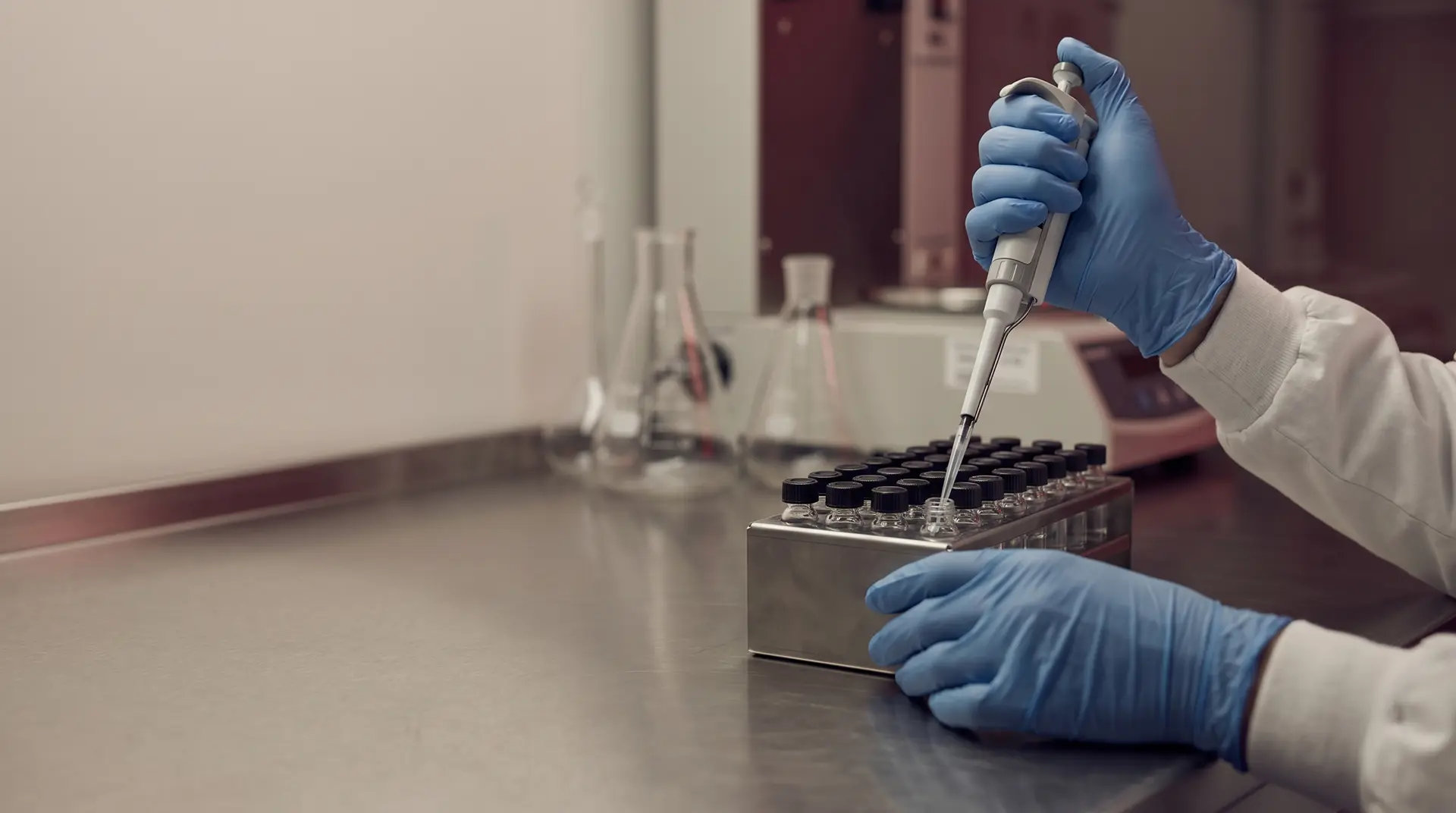
In research, results are only as trustworthy as the materials behind them. Two things establish whether a compound is what it claims to be: purity (how much of it is the intended compound) and identity (whether the structure is correct). The main tools for verifying both are HPLC testing and a Certificate of Analysis.
High-Performance Liquid Chromatography (HPLC) is a separation-and-detection method. A sample is pushed through a pressurized column where its components separate based on their chemical properties, letting the lab measure a purity percentage, spot impurities or degradation products, and confirm batch-to-batch consistency.
A COA is documentation confirming that a specific batch meets defined specifications. It's the transparency record for what testing was done and what it found.
High purity alone isn't enough — a compound can be pure but structurally wrong. Identity testing, usually by mass spectrometry, confirms the molecular weight and structure actually match what's expected.
The right threshold depends on how sensitive the research is.
Look for clear, batch-specific COAs, transparent HPLC data (not just a headline percentage), supporting identity (MS) data, and consistency across lots. A lack of transparency is a warning sign.
This article is for general educational purposes only and is not medical, health, or professional advice.
Related reading: What Are Peptides? · How Stability Affects Research Outcomes · Research Use Only (RUO) Standards